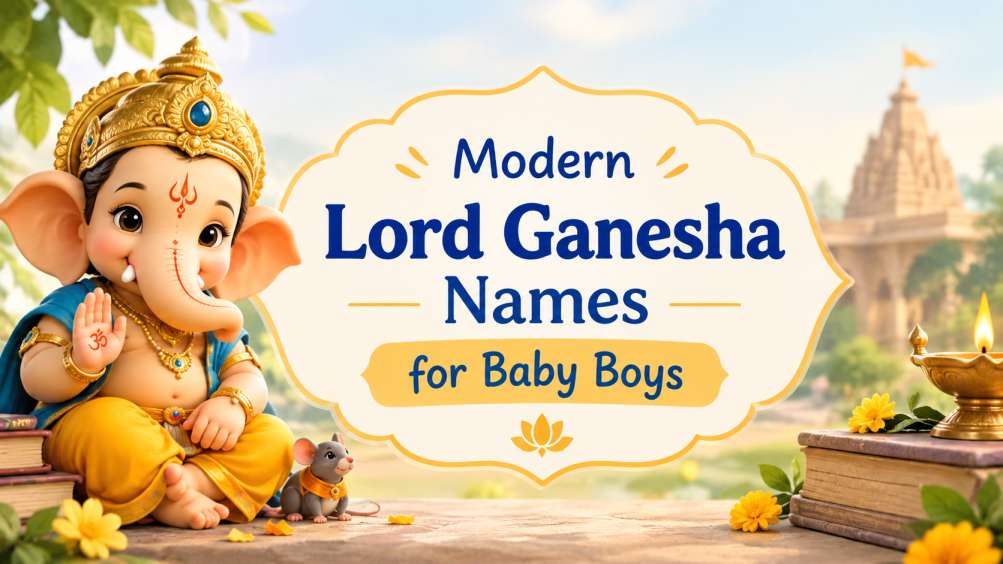
Choosing a baby boy’s name is an important family decision in Indian culture. Many parents today want a name that feels modern, short and easy to pronounce, while still carrying a connection to Indian heritage. Names associated with Lord Ganesha, the remover of obstacles and symbol of wisdom, are especially meaningful for families seeking a spiritual foundation without choosing an overly traditional-sounding name.
In Hindu tradition, Ganesha is associated with wisdom, intellect, auspicious beginnings, learning and discernment. His many names describe different qualities and forms. This makes Ganesha-inspired names suitable for parents looking for a name with both cultural depth and contemporary appeal.
From short names such as Aadi, Ekaksh and Om to distinctive Sanskrit names such as Avighna and Sumukh, there are several options that balance tradition with modern naming preferences.
Why Choose a Ganesha-Inspired Baby Name?
Lord Ganesha occupies an important place in Hindu religious and cultural traditions. He is traditionally invoked before auspicious beginnings, prayers, ceremonies and important undertakings.
A Ganesha-inspired name can therefore represent qualities such as:
- Wisdom and learning
- Good beginnings
- Intelligence and discernment
- Auspiciousness
- Strength and resilience
- Removing obstacles
- Creativity and adaptability
The name does not determine a child’s personality or future. Instead, parents can treat its meaning as a cultural value or blessing they wish to associate with their child.
Short and Modern Lord Ganesha Names
Short names are increasingly popular because they are easy to remember, write and pronounce across different languages and countries.
1. Aadi
Meaning: First, beginning or primordial.
Aadi is associated with the idea of an original or first principle and can work well for parents looking for a simple, contemporary Sanskrit name.
2. Ekaksh
Meaning: One-eyed; a traditional epithet associated with Ganesha.
It is distinctive, compact and strongly rooted in Sanskrit tradition.
3. Gan
Meaning: Group, category or community.
The name connects naturally with the traditional name Ganesha, whose name is commonly interpreted through gana and isha.
4. Om
Meaning: The sacred syllable Om.
Om is one of the most recognizable spiritual symbols in Hindu traditions. It is exceptionally short and carries broad philosophical significance.
5. Sumukh
Meaning: One with a beautiful or auspicious face.
Sumukh is a traditional name of Ganesha and offers a balance between classical Sanskrit and modern pronunciation.
Unique Ganesha Names With Strong Meanings
Parents who want something less common can explore names describing specific attributes of Lord Ganesha.
Avighna
Meaning: Without obstacles; one who removes obstacles.
The word comes from Sanskrit vighna, meaning obstacle, with the prefix a- indicating absence. It reflects one of Ganesha’s best-known traditional associations.
Vighnesh
Meaning: Lord of obstacles.
Vighnesh is derived from the traditional epithet Vighnesha, connecting the name with Ganesha’s role in relation to obstacles.
Gajendra
Meaning: King of elephants.
Although not exclusively a name of Ganesha, Gajendra has a strong elephant symbolism and a classical Sanskrit character.
Gajanand
Meaning: One with the face of an elephant.
This is a recognizable Ganesha-associated name and carries a devotional connection while remaining easy to understand.
Heramb
Meaning: A traditional name of Lord Ganesha.
Heramb is less commonly heard today, making it an option for parents seeking a distinctive Sanskrit name.
Ganesha Names and Vedic Astrology
In Vedic astrology, baby naming is sometimes connected with the child’s Janma Nakshatra, or birth star. Traditional naming practices may recommend particular starting syllables based on the nakshatra and its pada.
This approach is different from simply selecting a deity-inspired name.
Parents interested in a Jyotish-based naming process can consider:
- Calculate the child’s birth chart using the exact date, time and place of birth.
- Identify the child’s Janma Nakshatra and pada.
- Check the traditional starting syllables associated with that nakshatra.
- Shortlist Ganesha-inspired names beginning with the appropriate sound.
- Consider the name’s meaning, pronunciation and family preferences.
This creates a practical bridge between Vedic astrology, Sanskrit naming traditions and modern preferences.
Does the Zodiac Sign Matter?
The Moon’s nakshatra is generally more directly relevant to traditional naming than the Sun sign alone. However, parents may still consider the child’s Rashi (Moon sign) as part of a broader Jyotish consultation.
It is useful to remember that astrological naming traditions are cultural practices rather than scientifically established methods for predicting personality or destiny.
Practical Tips for Choosing a Modern Ganesha Name
A meaningful name should also work comfortably in everyday life.
Consider these factors:
- Meaning: Understand the original Sanskrit meaning before selecting the name.
- Pronunciation: Choose a name that grandparents, teachers and children can pronounce easily.
- Spelling: Avoid unnecessarily complicated spellings if simplicity is important.
- Cultural connection: Check whether the name has an established connection with Ganesha.
- Nakshatra syllable: If following Jyotish traditions, verify the recommended birth-star syllable.
- Global usability: Parents planning an internationally familiar name may prefer shorter Sanskrit names.
- Family tradition: Consider whether the name complements existing family names.
Simple Ganesha-Inspired Spiritual Practices
Parents do not need elaborate rituals to connect a child’s name with Ganesha’s symbolism. Simple devotional practices can be part of family life.
Traditional options include:
- Reciting “Om Gam Ganapataye Namah” during prayer.
- Remembering Ganesha before beginning an important family activity.
- Teaching children values associated with Ganesha, such as learning, patience and thoughtful decision-making.
- Offering prayers on Ganesh Chaturthi or other family observances according to personal tradition.
The purpose of these practices can be devotional and cultural rather than based on guaranteed material outcomes.
Conclusion
Modern Lord Ganesha names for baby boys can combine Sanskrit heritage, spiritual meaning and contemporary simplicity. Names such as Aadi, Ekaksh, Sumukh, Avighna, Vighnesh and Heramb offer different styles, from extremely short choices to distinctive traditional names.
For families following Vedic naming traditions, the child’s Janma Nakshatra and pada can provide an additional framework for selecting the starting sound. Ultimately, the most suitable name is one whose meaning, pronunciation, cultural connection and family significance feel right to the parents.
A beautiful Ganesha-inspired name can serve as a lasting reminder of values such as wisdom, learning, auspicious beginnings and resilience throughout a child’s life.
FAQs
1. What are some modern Lord Ganesha names for baby boys?
Short and modern options include Aadi, Ekaksh, Om, Sumukh and Avighna.
These names have Sanskrit or traditional associations while fitting contemporary naming preferences. Parents can select according to meaning, pronunciation and family traditions.
Related tips:
- Check the original meaning.
- Consider everyday pronunciation.
- Match the name with the family surname.
2. Which short Ganesha name is suitable for a baby boy?
Om, Aadi and Ekaksh are among the shorter options associated with Ganesha or Ganesha-related symbolism.
Short names can be particularly convenient for modern families because they are easy to spell and pronounce. However, their meanings should be checked carefully because not every short Sanskrit name is exclusively a name of Ganesha.
Related tips:
- Verify the traditional association.
- Check Sanskrit meaning.
- Consider the name’s cultural context.
3. Can I choose a Ganesha name according to my baby’s Nakshatra?
Yes, traditional Jyotish naming practices can combine the baby’s Janma Nakshatra syllable with a suitable Ganesha-inspired name.
The child’s exact birth details are used to identify the nakshatra and pada. Parents can then shortlist names beginning with the traditionally recommended sounds.
Related tips:
- Use exact birth details.
- Identify the nakshatra and pada.
- Check the recommended naming syllables.
4. What does the name Avighna mean?
Avighna refers to being free from obstacles and is connected with Ganesha’s traditional role as a remover of obstacles.
The name comes from Sanskrit terminology related to vighna, or an obstacle. It offers a meaningful choice for parents who want a name symbolizing smooth beginnings and resilience.
Related tips:
- Learn the Sanskrit root.
- Consider the symbolic meaning.
- Check pronunciation before finalizing.
5. Is Sumukh a name of Lord Ganesha?
Yes, Sumukh is a traditional epithet of Lord Ganesha.
The name is associated with an auspicious or beautiful face and appears among traditional Ganesha names. Its relatively simple pronunciation also makes it suitable for parents seeking a classical name with contemporary usability.
Related tips:
- Consider its Sanskrit meaning.
- Compare it with other Ganesha epithets.
- Check whether it fits the baby’s nakshatra syllable.
6. Should astrology decide a baby’s name?
Astrology can be one consideration in traditional Hindu naming practices, but parents can also consider meaning, pronunciation, family traditions and personal preference.
Nakshatra-based naming is a cultural Jyotish practice rather than a scientifically established method for determining a child’s personality or future. A balanced approach can respect tradition while keeping practical considerations in mind.
Related tips:
- Consider nakshatra if your family follows Jyotish.
- Prioritize a meaningful name.
- Choose a name comfortable for the child to use throughout life.